
When people always ask what my favorite country that I've traveled to is, I can never give a single-word answer. I say that it depends on what it’s regarding; beaches, food, culture, people, nature, etc. Thailand is definitely one of my favorite countries for several reasons.


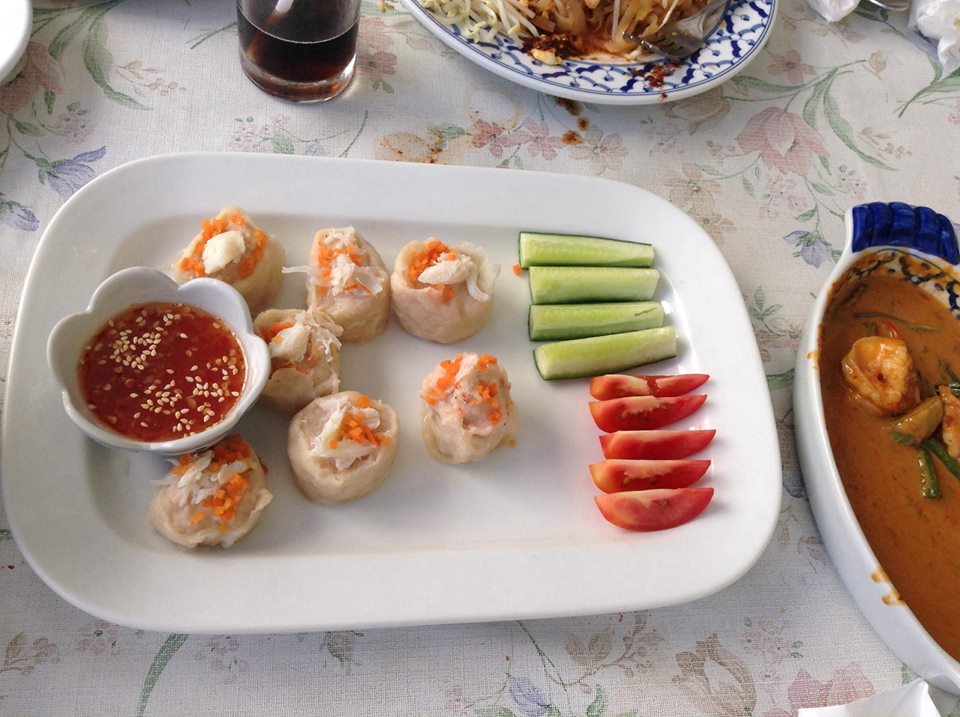
Thai food is my favorite so I was in heaven when eating in Thailand. You can get street food for an average of $1 such as fresh pad Thai, fried rice, egg rolls, dumplings, noodle soup, meat skewers, and my favorite, Som Tam (green papaya salad).



I’m a fruit lover so traveling throughout Southeast Asia, I get to eat some of the freshest and most exotic fruit. Thailand has some of my favorite fruits. I tried fruits for the first time there such as jackfruit, rambutan, rose apple, sapodillas (small delicious fruit that tastes like brown sugar and molasses), and dragon fruit. Some of my other favorites are papaya, lychees, mangoes, passion fruit, starfruit, pineapple, and fresh coconuts. You can get a fruit shake (a.k.a Smoothie) in Thailand for practically nothing, especially if it’s from a street cart. The fruit is always displayed so beautifully and you can choose whatever you’d like in it. Be sure to ask for no extra sugar in your fruit shake if you don’t want a bunch of added white sugar to your drink. Lots of extra sugar is extremely common in Asian countries. Also, it’s popular for them to use condensed milk in fruit shakes which will make it sweeter as well. I really liked the condensed milk in my Thai tea and iced coffee drinks there.


If you're adventurous, you can try a plethora of fried insects from the cart on Khao San Road in Bangkok.

Massages in Thailand are amazing. They’re really cheap! It cost around $2.50 for an hour foot massage (which includes hands, arms, legs, feet, head, and back!) to around $5 for an hour Swedish or Thai full-body massage. After every massage you’re offered hot tea for detox. I went for multiple massages a day because not only are they really good but you can’t get a massage for that cheap anywhere in the U.S! I didn't try it but, you can put your feet in a large tank of minnows and have them eat the dead skin. Many tourists like to try this, not I though!


If you love to shop, you’ll love
Thailand! Thailand was one of my most
favorite countries to shop in. Not
because of the bargaining because I hate to bargain (I never want to way under
price and offend them but they will try to over charge you any chance that they
get) but, because of the cool stuff that there is to buy. I bought sarongs, tribal printed backpacks,
purses, elephant figurines, bracelets, wooden bowls, natural oils, a massage
herbal pack, and more. Be sure to
bargain though! I also recommend “shopping” around for the best prices. I would save the shopping for cities like
Chaing Mai or other less touristy places than Phuket or Bangkok. The prices will be much lower.


I'm a beach bum by far and Thailand has some really great beaches. Down around the Phuket area, the beaches are spectacular and the countless islands are pretty awesome. There are a few main areas that Phuket is broken up of; Karon, Kata, and Patong. I knew nothing about Phuket and any of its areas so I chose to stay in Patong based on reviews on accommodation websites that I use. I took some island-hopping tours while in Phuket that went to places like James Bond Island and Koh Phi Phi Island. We also took tours that took us to popular sites like the Big Buddha, great viewpoints to take photos, temples (all temples will have something for you to borrow to cover up your shoulders and legs to go inside if you are a woman) and many other places. Island-hopping tours are super cheap and they always include a really nice spread of delicious and fresh Thai food for lunch. I recommend doing some price comparisons by looking around first like I always do and even try to bargain prices. It also helps if you use the same tour company for all of your tours in that location because they're more likely to give you a nice discount. I found one girl who worked at a tour desk on the streets in Phuket who was really nice and gave us great rates. We recommended people to her and she gave them great prices as well. You can also discuss booking a private tour for all day and customize where you’d like to go. This is actually pretty cheap and easy to do and is a great way to see more that you’re interested in seeing in a day. The driver can also recommend their favorite spots too. We did this in Phuket and we happened to drive past some elephants on the side of a road coming down a mountain and our driver stopped to let us pay to wash, feed, and take pictures with the baby elephant. His name was Charlie.


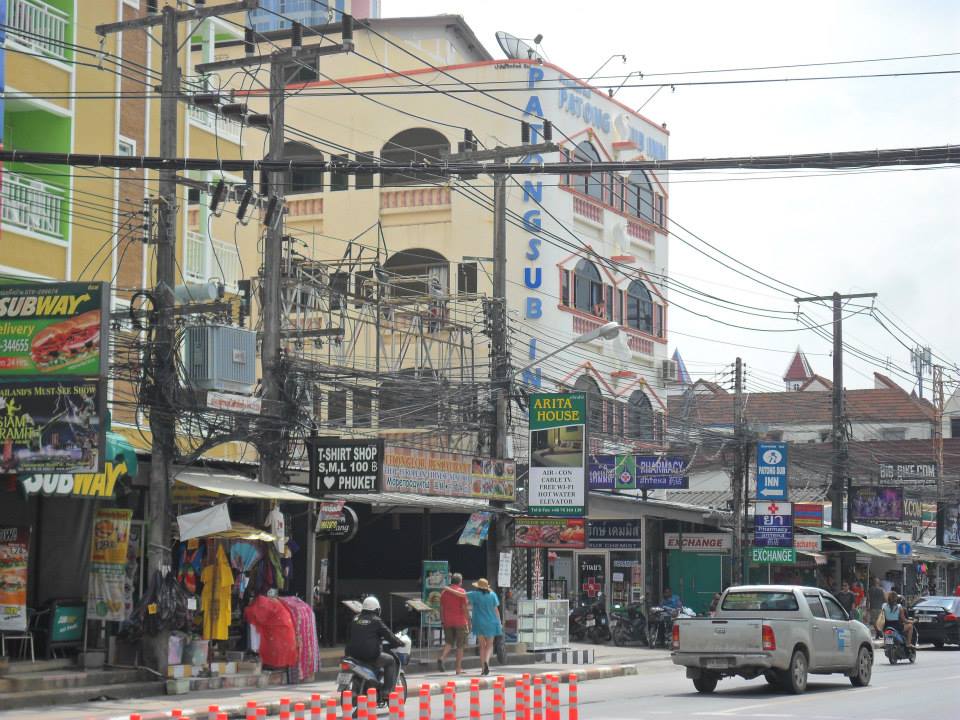
Patong was a great choice to stay in Phuket because it had a bit of everything that we wanted. It was by the beach, there was plenty of street food and restaurants, it had a lot of shopping areas, it was really easy to navigate, there were plenty of tour agencies and accommodations of all price ranges, and it has Bangla Road which is prime for nightlife and partying if that’s something that you’re into when traveling. Patong is a pretty touristy location which isn’t something that I usually go for but since I was with my mom and her friend, it was perfect for us. Our hostel/hotel was called Arita House. We had a private room and bathroom with everything we needed on the main road for only $13 a person. The night before my mom and her friend came, I stayed in a dorm hostel called Feel D Hostel just off of the main road for $8 a night.

Just like Phuket, the city of Krabi is also broken into different areas. I chose for us to stay in Ao Nong because it was close to the beach as well. There is one long main road that runs from the beach up to where more accommodations are. Krabi is a beautiful place with a great beach. I remember a lot of colorful Thai lanterns and décor hung near the beach. One of my favorite parts of Ao Nong, Krabi was the beach side massages. At the far end of the beach is shallow stream where lots of monkeys gather. The monkeys are super cute but do be careful because they are extremely smart and love to steal your belongings. Don’t wear shiny jewelry near them, hold on to your camera and valuables, and be ware because they may jump on you too! They’ll even steal your food if you’re not careful. In Ao Nong we stayed in a dorm that had cool capsule beds for $11 a night called Slumber Party Hostel.


Bangkok. Ooh Bangkok. I have a love-hate for Bangkok. It’s a big and crazy city, just like most capital cities. Bangkok does offer plenty of nightlife, shopping, food, and things to do and see. The floating market is really popular in Bangkok, so is Khao San Road. Khao San Road has a bunch of shops and food during the day and a chaotic and insane nightlife. I wouldn’t recommend staying on Khao San Road because of how nuts it gets at night but staying nearby might be a good idea. There were riots going on in Bangkok while I was there but the city is so big that I didn’t notice any violence or anything alarming.


If you’re going to book any international flights, I’d fly into or out of Bangkok or Phuket, the prices tend to be cheaper. Bangkok makes a great transportation hub for travelers. In Bangkok, I stayed at Rainbow Hostel for $3-$7 a night in a dorm and a private room some nights. Lucky House is also nearby and has more private rooms for cheap.


Chiang Mai is a much mellower city compared to Bangkok. It’s in the north but is really easy to get to from pretty much anywhere in Thailand. Chiang Mai is great for shopping with its outdoor markets. Don’t forget to bargain with them! They expect you to. If you don’t, be prepared to pay a ridiculous price! There are great tours to be booked out of Chiang Mai if you’re looking for something to do. My mom’s friend took a Thai cooking class which she booked right from our hostel. We stayed in a private room at a hostel called M.D House which was pretty nice with lots of amenities and really cheap!

The weather in Chiang Mai can be up and down. It was sometimes rainy and gets pretty chilly at night. I remember getting extremely ill in Chiang Mai from the temperature changes. Many people visiting Thailand want to see Elephants. You must be careful and aware that you aren’t using a place that abuses the elephants. Of course they won’t tell you that they do but, it’s common for them to use big hooks to hit the elephants. I met a friend in my hostel who came back from an elephant trekking tour and was regretting ever going because of how they treated the elephants. As tourists, we must be knowledgeable and aware of these sorts of things and be sure to not support them by booking tours and giving them our money. We didn’t go on an elephant trekking tour at all because of this but there are places that are good. There is a place near Chiang Mai called Elephant Nature Park which is a sanctuary that helps the elephants. It’s a popular place for people to volunteer their time to bathe and feed the elephants. It does cost more and does require more time but at least you know that you’ll be helping the elephants rather than contributing to an industry that abuses animals in order to make money from the tourist industry.
One of my most favorite places
that I stayed in Thailand is a really small town called Ubon which short for
Ubon Ratchathani. It’s a long and
strange story on how I wound up in this town beginning with being in Laos with
a few days until New Years Eve and trying to get back into Thailand because I
had a flight on January 2nd
but I didn’t want to be in a touristy city that would be crazy for New
Years Eve. Long story short, I booked a ticket
to Ubon from Don Det Island in Laos because Ubon is near the border and is a
popular place for travelers to change transportation in route to wherever they
are trying to go. I didn’t know where I
was planning to go; possibly just getting into Bangkok and walking around in
the early morning to find a place that isn’t completely filled already which is
NOT what I wanted to do. I was just
going figure it out once I got to Ubon.
Once I crossed the border by foot, people from my bus parted ways but a German
couple was taking a pick-up truck into Ubon which was just and hour or so
away. It’s common for tour companies to
use pick-up trucks at borders to get their travelers to where they asked to
go. On our ride to Ubon, a place that I
knew absolutely nothing about, I talked with the German couple and told them
that I had no set plans on what I was going to do and how everything I looked
up in nearby towns for New Years Eve were already booked. They told me that they found a hostel that
seemed pretty nice online that was in Ubon and that they were going to stay the
night there because they had a flight out of the small airport in Ubon the next
morning. They paid our driver to take
them right to the hostel rather than the bus station and once we got there, the
German guy ran inside to ask if they had availability still. Luckily, they did. So we split the money for our driver and
saved him an extra trip to the bus station.
I planned to stay just the night until I figured out what to do for New Years
Eve but, I wound up staying almost a week!
I loved Ubon and my hostel. It’s
called Fun Dee Mansion and is family owned.
It cost only $12 a night. It’s
like a mini-hotel with big rooms with everything that you’d need; big clean
bathroom and shower, mini fridge, cable t.v, air-con, coffee maker, big comfy
bed, a couch, dressers, a desk, a closet, a small patio, a place to hang your
laundry, free wifi, and more. I didn’t
want to leave. It’s a small town where
tourists rarely stay in so it was quiet.
There is a university nearby so there are mostly younger locals
around. There is a big shopping center
across the main busy road and a huge supermarket that is really cheap. There isn’t much to do or see there but it’s
a great place to stay in transition and if you want to just re-coop after
traveling in crazy Southeast Asia. I
stayed there for New Years Eve and just skyped my mom and pup.

Some other popular places to visit
in Thailand are: Koh Phangan (an island where the Full Moon parties are held)
the island of Ko Samui, and the cities of Chiang Rai, Pai, Pattaya, Ayutthaya, and
Tak.


 There is a lot to do in Thailand
but some things to do other than shop, eat, and be a beach bum are: hike to
viewpoint, visit museums, go to national parks, experience prayer sessions,
explore caves, go kayaking and boating, snorkeling, scuba diving, go in temples, take a Muay Thai
kickboxing class and watch a Muay Thai match, volunteer at a local school or
with animals and more!


Traveling throughout Thailand is really easy and cheap. You can get a cheap bus or train to practically anywhere. I liked the night buses because it’s a cheap way to pay for transportation and accommodation to wherever you plan to go next. I definitely recommend having something to do like reading a book, writing in a journal, or listening to music because the rides can be long. Make sure to have snacks with you too because some places that the buses stop at along the way don't offer the healthiest or most sanitary of options. Plus, those little shops and restaurants will obviously charge more. Always be aware of your belongings, especially on night buses and if you fall asleep. Have a travel pillow because it can be uncomfortable even though they often borrow you a blanket. There is a bathroom on the bus but it’s Thailand, and a bus, so it’s not pleasant. I limited my liquid intake when in transport to avoid public toilets at all cost, especially since I’m a girl. Budget flights to and from Thailand are often really cheap to surrounding countries. You will definitely be sick of hearing the word “tuk tuk” being yelled at you all day, every day. Tuk tuks are a really cheap way to get around Thailand’s cities. Just be sure to negotiate a price BEFORE getting into the tuk tuk. They will try to rip you off. If there is a meter, be sure to tell them to turn it on. The drivers in Thailand, on buses, tuk tuks, taxis, any sort of mobiles, drive like maniacs so just be prepared, wear a seat belt if there is one, and brace yourself.


Paper products are like gold in Southeast Asia, including Thailand. They are scarce and can be pricey there. I am a paper hoarder when I travel. I even returned to the U.S one time with a backpack filled with toilet paper rolls still! Accommodations will give you just one roll at a time until you run out and ask for another. Keep in mind that it’s the cheap rolls that are thin too. Napkins are scarce and rarely given out at point of purchase. I even got yelled at for grabbing a napkin from a coffee shop counter after buying a drink in 7-Eleven, even thought the coffee shop was IN the 7-Eleven but because the coffee wasn’t from them, I couldn’t have one napkin from their counter. I collect any toilet paper, napkins, paper towel, and tissues that I find along the way. You never know when you’ll need it especially when in transit at airports, buses, or trains which you won’t find any often. Along with that, I also recommend having soap and hand sanitizer with you at all times too!
Thailand was one country that I remember getting ripped off often at. Always count your change when paying for anything in Thailand. They’ll expect you to not know the currency and that you won’t notice. This happened often to me but I always count my change and calculate my total before paying. Also, be aware of your currency that is given to you. Although most of the bills will be really old and dirty, if it’s bent too much or torn, no one will take it. My mom got money from a bank and then tried to pay for something and the person wouldn’t take it because they said it was too bent in the center. She just got it from the bank! Once, someone tried giving me a folded over burnt bill and hoped that I didn’t notice. I opened it and asked for a new one. Although things are fairly cheap there, everything adds up and every bit of money counts when you’re on a budget so just pay attention! Thailand is cheap but not as cheap as it use to be because of the rise in tourism. It’s still a great place to travel to and you can definitely stay on budget there!
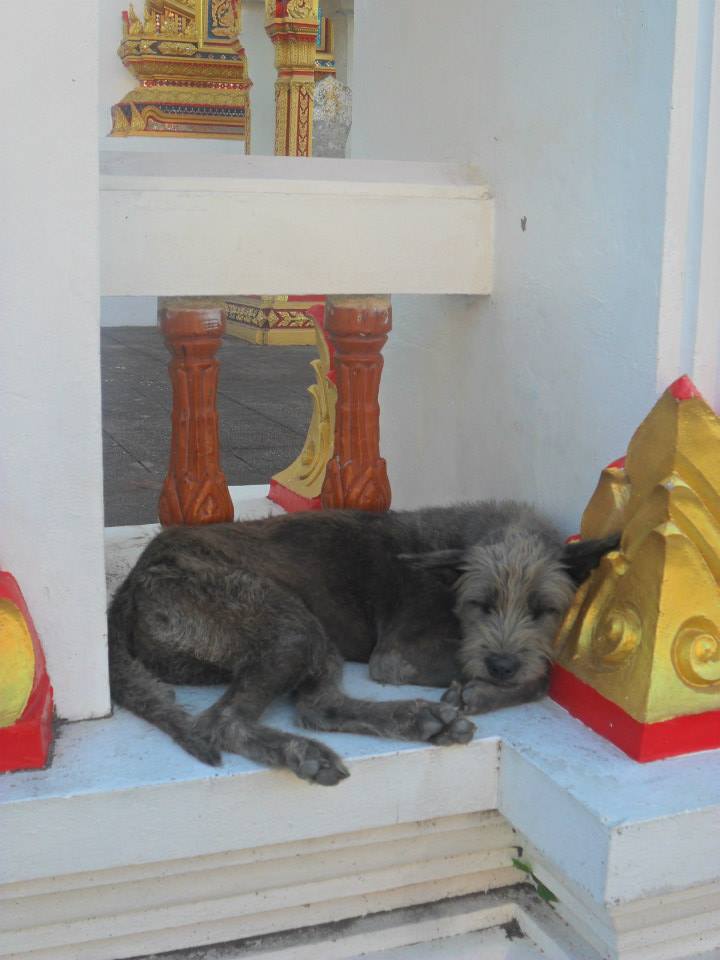
Thailand is filled with animals of all kinds. There are tons of stray dogs everywhere, just like in most under-developed and developing countries. The dogs can be really cute and often nice but, just be careful. They are still stray dogs and can bite. I have met people throughout my travels who were bit by stray dogs, often on accident when startling them or walking too close. The same with monkeys. They can definitely bite too. My mom and I are dog lovers and seeing strays always breaks my heart, everywhere I go. We did buy street food and meat balls to feed the dogs. As long as you’re careful and you feel out how the dogs are. Often they’re pretty chill in Thailand. Just in case, I definitely recommend being updated on your rabies shots. It’s annoying and complicated to try to get the shots while traveling if you get bit by an animal. I met a girl who was bit by a dog and had to find clinics along the way of her travels to get her shots.


Along with your rabies shot, I’d
suggest getting a tetanus and hepatitis shots.
Thailand does not require any vaccines but does suggest these. The first thing that I did in Phuket was accidentally push my elbow into a rusty nail on a seat in a bus but I was glad
that I had my tetanus shot. I wouldn’t
worry about getting malaria pills because they’re not cheap nor are they great
for you. Just use bug spray of
course. There’s nothing that you really
need medically for Thailand other than those shots that I suggested.
Thailand does not require a visa for U.S citizens but you can stay for 30 days. If you want to stay longer, just leave to another country nearby briefly and then go back! There are not visa on arrival stickers needed for Thailand either but in nearby countries like Laos and Cambodia they do. They’re around $20, you get them at the borders, and they require a full empty page. Vietnam does require a visa which I’d recommend getting before leaving the U.S.


